
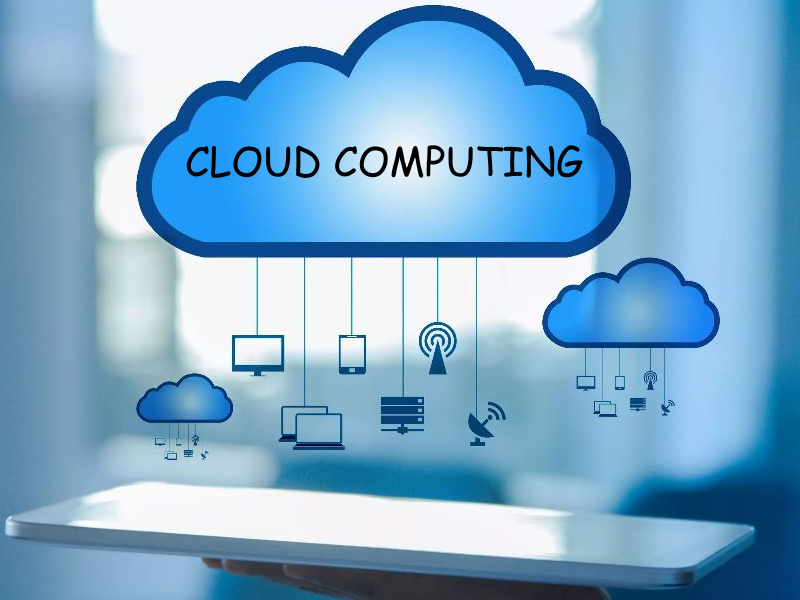
What is the transformative power of cloud computing?
Cloud computing is on-demand access, via the internet, to computing resources applications, and servers.
The CSP makes these resources available for a monthly subscription fee or bills them according to usage.
Cloud provides elasticity instead of purchasing excess capacity that sits unused during slow periods.

The scale capacity up and down in response to spikes and dips in traffic
You can also take advantage of your cloud provider’s global network to compare and spread your applications closer to users around the world.
TYPES OF CLOUD COMPUTING:
Public Cloud
Public cloud is a type of cloud computing in which a cloud service further provider makes computing resources.
to complete enterprise-grade infrastructures and development platforms
These resources might be accessible for free, or access might be sold according to further subscription-based or pay-per-usage pricing models.
The public cloud provider owns, manages, and assumes all responsibility for the data centers,
Hardware, and infrastructure on which its customers’ workloads run.
Typically provides high-bandwidth network connectivity furthermore to ensure high performance and rapid access to applications and data.

Private cloud
Private cloud combines many of the benefits of cloud computing including elasticity, scalability, and ease of service delivery
The access control, security, and resource customization of on-premises infrastructure.
A private cloud can also be hosted on an independent cloud provider’s infrastructure or built on rented infrastructure housed in an offsite data center.
Hybrid cloud
A hybrid cloud is just what it sounds like a combination of public and private cloud environments
.

Specifically, and ideally, a hybrid cloud connects an organization’s private cloud services and public clouds into a single, flexible infrastructure for running the organization’s applications and workloads.
The goal of a hybrid cloud is to establish a mix of public and private cloud resources
A level of orchestration between them gives an organization the flexibility to choose the optimal cloud for each application or workload and to move workloads freely between the two clouds as further circumstances change.
Finally, this enables the organization to meet its technical and business objectives more effectively and cost-efficiently than it could with public or private cloud alone.
See our other blogs click me


